
Stairs become the single biggest obstacle in a home once mobility starts to change, not because anyone wants to give them up, but because every trip up and down starts to carry risk.
A stairlift solves that problem, but the moment you start researching one, you hit a fork in the road: straight or curved? It sounds like a simple shape question and in many ways it is, but it also decides how the lift is built, how it’s installed and how it will perform on your particular staircase for years to come.
This guide breaks down exactly how to tell which type your home needs, what a stairlift for narrow stairs UK homeowners often search for actually means in practice and how to judge whether you’re genuinely looking at the best stairlift has to offer for your situation, not just the first one a salesperson suggests.
What’s the Real Difference Between a Straight and Curved Stairlift?
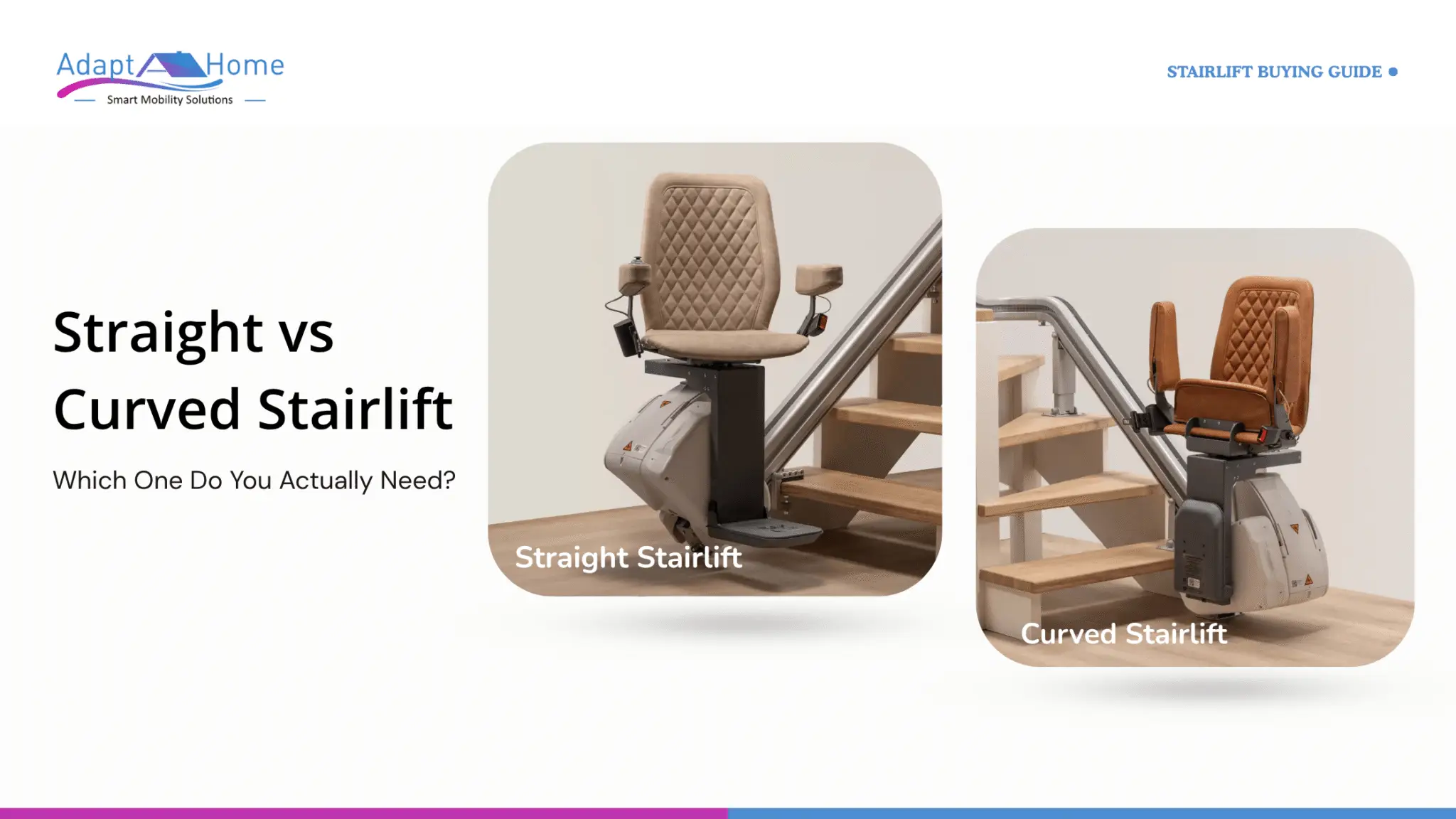
At a basic level, the names tell you most of what you need to know. A straight stairlift runs on a single, uninterrupted rail and is designed for staircases that go from bottom to top in one continuous line, with no turns, bends or landings along the way.
A curved stairlift, on the other hand, uses a rail that’s custom- made to follow every twist in the staircase, whether that’s a gentle curve, a 90-degree turn, a half-landing, or a full spiral. The distinction isn’t just cosmetic. It changes how the rail is manufactured, how the chair navigates corners, how long installation takes and how the whole system is priced and built.
A straight rail is typically off-the-shelf and can be cut to length on-site. A curved rail has to be measured, modelled and manufactured specifically for your staircase — no two curved rails are identical.
How Your Staircase Shape Decides the Answer
In most cases, your staircase makes the decision for you. The real question isn’t really “which do I prefer” — it’s “what shape am I working with.” Here’s how to read your own stairs.
Straight Staircases If your stairs run in one direction with no bends, corners, or landings between the bottom step and the top, you have a straight staircase and a straight stairlift will almost always be the simpler, more straightforward fit. This is the most common staircase type in UK homes, particularly in semi-detached and terraced houses built before open-plan landings became popular.
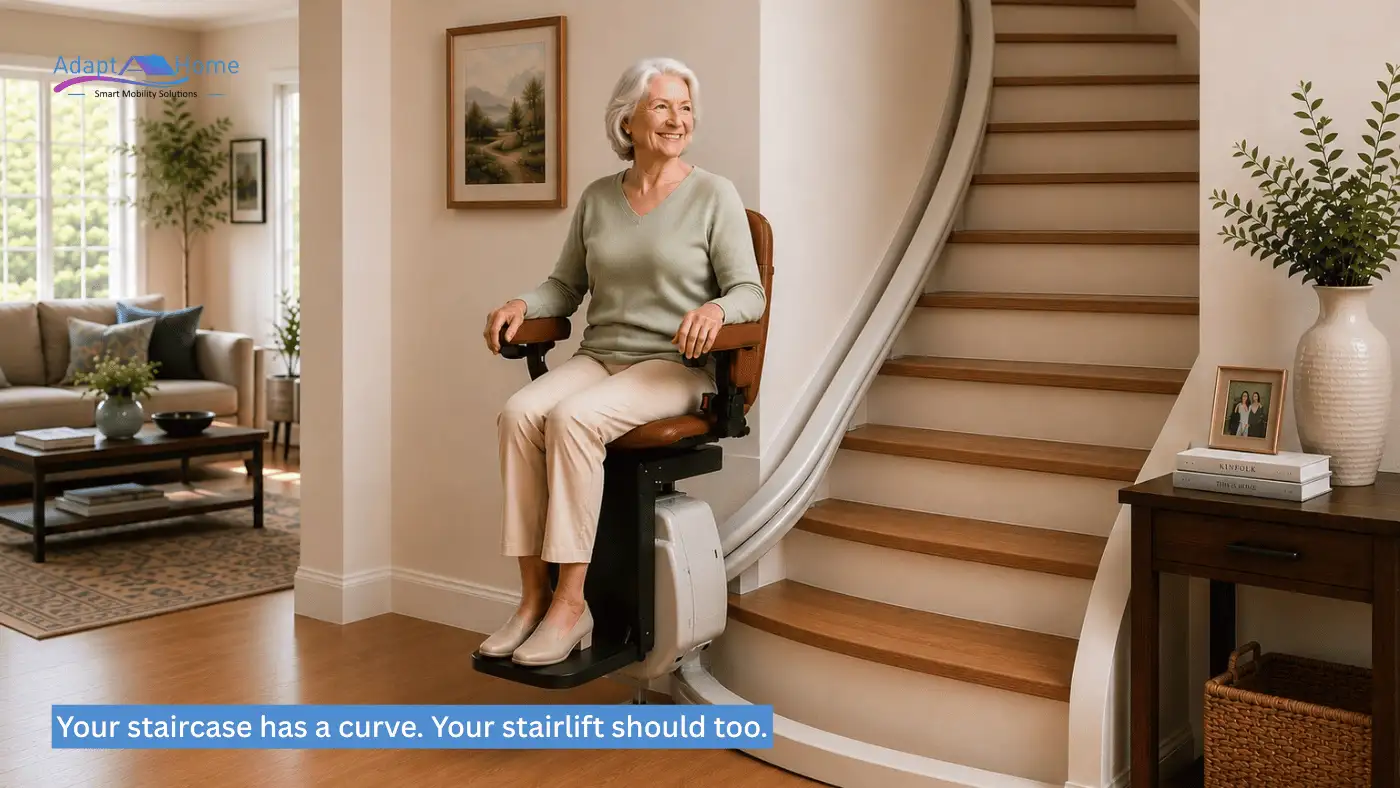
Curved or Bent Staircases If your staircase changes direction at any point, even a slight bend rather than a sharp turn — you’ll need a curved stairlift. This includes staircases with a quarter-turn, a half-landing partway up, a winding spiral shape or stairs that curve gently along an outer wall. Many Victorian and Edwardian properties, along with newer homes with feature staircases, fall into this category.
Staircases With Landings or Multiple Turns A staircase with a landing in the middle, or one that turns more than once, still falls under “curved,” even though it might feel like a more complex category of its own. The rail simply needs more custom bends. The good news is that curved stairlifts today are built to follow almost any layout, including dog-leg stairs, U-shaped staircases and stairs that change width partway up.
Stairlift for Narrow Stairs UK: What Are Your Options?
One of the most common worries people raise is whether their staircase is simply too narrow for a stairlift to fit at all. It’s a fair concern — many UK homes, especially older terraced and Victorian houses, have staircases that are noticeably tighter than modern building standards.
The reassuring answer is that a stairlift for narrow stairs UK manufacturers build every day is a well-established part of the market, not a niche workaround. Manufacturers design slimline rail systems and compact folding seats specifically for this purpose and when the chair, footplate and armrests are folded away, most modern stairlifts leave a clear, walkable path down the staircase for everyone else in the household.
- Rail position matters more than rail width — a track mounted close to the wall (rather than the centre of the tread) preserves far more usable stair space.
- Folding components are non-negotiable on a narrow stair — seat, footrest and armrests should all tuck away neatly when not in use.
- A home survey beats guesswork — narrow and oddly shaped staircases are exactly why a proper in-person assessment, rather than a phone quote, matters before you commit.
If a survey confirms your staircase is unusually tight, this is also where the straight vs curved decision intersects with practicality: a straight lift on a narrow run is generally the simpler, less obstructive build, while a narrow curved staircase may benefit from a slimmer rail profile to keep the route clear at every turn.
How to Know You’re Choosing the Best Stairlift UK Has to Offer
“Best” isn’t a single product, the best stairlift UK households actually keep using for years is whichever one matches your staircase, your body and your home, all three at once. Once you’ve worked out whether you need a straight or curved rail, a few other factors separate a genuinely good fit from one you’ll be unhappy with in six months.
Comfort and Build for the User:
Seat height, swivel function at the top of the stairs, weight capacity and the responsiveness of the controls all affect daily comfort far more than the brand name on the chair. If the stairlift is for someone with limited grip strength or balance issues, look closely at the control type and how easily the seat swivels to a safe disembarking position.
Installation Speed and Disruption:
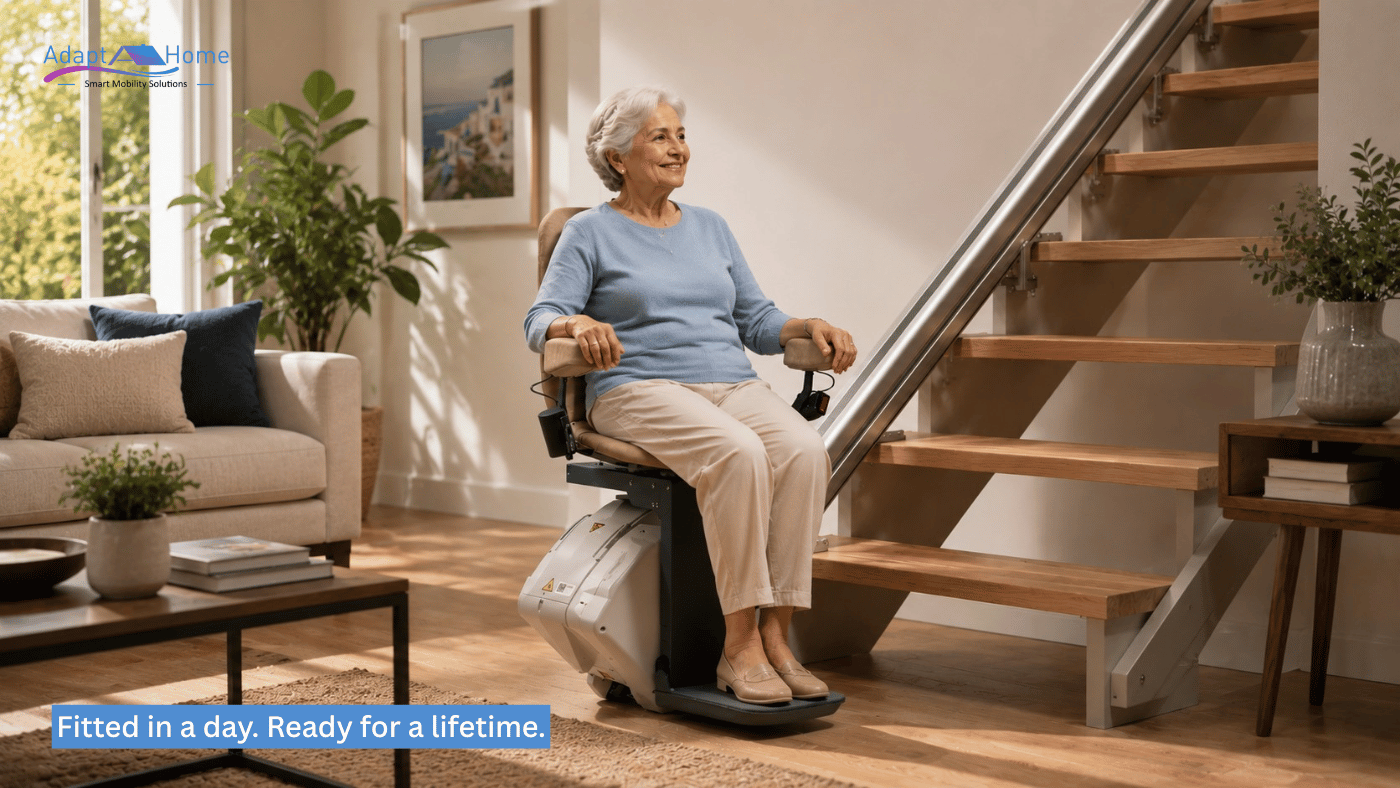
Straight stairlifts are usually quicker to install, often within a single day, because the rail doesn’t need bespoke manufacturing. Curved stairlifts take longer, the rail has to be measured and built to match your exact staircase, so expect a longer lead time between survey and fitting. A reputable supplier should be upfront about this difference from the very first conversation.
Indoor and Outdoor Use:
Both straight and curved stairlifts are available in outdoor-rated versions, built with weatherproof housings and corrosion-resistant components for external steps. If you need a lift for a porch, garden staircase or an exterior entrance, make sure you’re comparing the correct outdoor models rather than standard indoor units.
Can You Get Help Funding a Stairlift?
Cost is naturally part of the conversation and the good news is that a straight or curved stairlift doesn’t have to be paid for entirely out of pocket. Searching for UK stairlift grant scheme can offer is one of the most useful steps you can take before buying, since several routes can reduce what you pay:
- Disabled Facilities Grant (DFG) — the main stairlift grant UK local authorities offer, this is a means-tested grant available across England, Wales and Northern Ireland for home adaptations, including stairlifts, where an occupational therapist assessment confirms the need.
- VAT relief — individuals with a long-term physical or mental impairment, or a chronic condition, may be eligible to buy mobility equipment without paying VAT.
- Charity and local authority schemes — some councils and charitable organisations offer additional support or refurbished equipment for those who don’t qualify for a full grant.
The Bottom Line
Choosing between a straight and curved stairlift almost always comes down to one simple test: does your staircase change direction at any point? If it runs in a single straight line, a straight stairlift will do the job, install faster and keep things simple. If there’s a turn, a bend, or a landing anywhere along the way, a curved stairlift, built specifically around your staircase is what will actually work. From there, the right choice comes down to the details: enough clearance on a narrow stair, the right seat and controls for the person using it and a fitting timeline that suits your household.
A proper in-home survey takes the guesswork out of all of it, which is exactly why it’s worth arranging one before deciding on anything. Not sure which category your staircase falls into, or want a professional opinion before you commit?
Adapt A Home offers free, no-obligation home surveys across London and the South East, with straight and curved stairlift options fitted by fully trained engineers, along with ongoing servicing once it’s installed.

Frequently Asked Questions
No. A straight rail cannot bend around a turn or landing, so any change of direction in the staircase requires a curved stairlift built to match that specific shape.
A curved stairlift’s rail is custom-manufactured to match the exact bends and turns of your staircase, rather than cut from a standard length like a straight rail. That means more measuring, modelling and lead time before installation, a home survey is the best way to understand exactly what your staircase will involve.
Straight stairlifts can often be installed within a single day, since the rail is ready-made. Curved stairlifts take longer because the rail has to be measured and manufactured specifically for your staircase before it can be fitted.
No, not when properly fitted. Modern stairlifts fold away neatly: seat, footrest and armrests, leaving a clear path for others to use the stairs normally when the lift isn’t in use.
Narrow staircases are a common scenario, not a barrier. Slimline rail systems and compact folding seats are widely available and a home survey will confirm exactly what will fit. For extremely tight staircases, specialist options exist. A diagonal travel seat (also known as a “turn and go” or “swivelling travel seat”) moves at an angle to the stairs, creating more clearance, though some users find the motion takes a little getting used to. Where space is still a concern, perching or standing stairlifts take up even less room, though these depend on the user’s ability to stand or perch comfortably. A free home survey will identify the best solution for your staircase and your needs.
Yes. Both straight and curved stairlifts come in outdoor-rated versions with weatherproof housings, designed specifically for external steps and entrances.
Don’t choose a stairlift without seeing your staircase first.
Every staircase is different. Our engineers survey yours for free and recommend a straight or curved stairlift built around your exact layout.